July 2, 2016
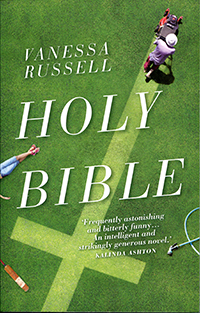 Holy Bible
Vanessa Russell
ISBN: 9781742706269
$15
335 pp
Sleepers Publishing 2013
This is Vanessa Russell’s first novel and it is beautifully and thoughtfully crafted. It delves into the underbelly of a Christian religious cult that, like many such groups in real life, has internal frictions that threaten to tear it open; and they eventually do. (more…)
June 19, 2016

What should we, as a society, as taxpayers, be paying for? What should we be subsidising? Who should we bail out?
It is possible to divide our society into three major sectors: private individuals, corporations, and government. Society is the creature of its individuals and arguable should exist to serve those individuals. The individuals also constitute the corporations and elect the governments. (more…)
May 21, 2016
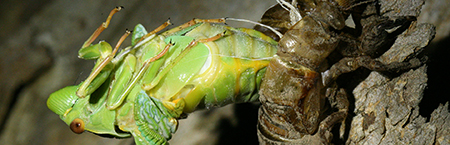
Grub’s up.
What are you eating and what’s eating you? Survival of any individual, and of any species on this planet, is a matter of balance. While you are alive, you eat to stay alive and, hopefully, thrive and pass on your set of winning genes to the next generation of critters. (more…)
May 16, 2016
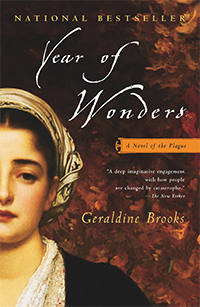 Year of Wonders
Hannie Rayson
Harper Collins 4th Estate 2001
ISBN: 9781841154589
$19.99
320 pp
A novel set in the years of the Great Plague in England (1665-66) would not seem, at first blush, to be a ‘good read’. However, Geraldine Brooks surprises the reader.
Year of Wonders is set in the village of Eyam, in the Peak District of Derbyshire. In 1666, the village voluntarily quarantines itself – no-one to leave, no-one to enter – when plague (Yersinia pestis) arrives and starts felling the villagers. This is historically correct and some of the characters in the story are based on historical people. (more…)
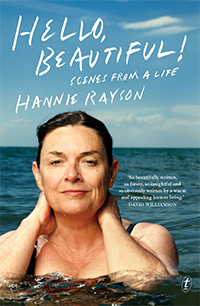 Hello, Beautiful!
Hannie Rayson
Text Publishing 2015
ISBN: 9781922182128
$29.99
320 pp
Autobiographies are stories – they contain truth, but they are still stories. How much truth they convey depends on the author – subject to accuracy of memory and to the courage to reveal personal matters. There is also the question of how much the autobiographer is prepared to include family, friends and enemies in the revelations. (more…)
May 3, 2016

Once upon a muddled time, in a country full of uncertain people, there was a confused king, bouncing from one ill-defined idea to another. No-one seemed to know that things could be different, because everyone had forgotten that they ever were different. (more…)
April 16, 2016

Take off that mask. Go on. You can’t, can you?
Over eighty million people who are registered on Facebook are not who they say they are1. I’m not surprised. Actually, I’m surprised the number is so low. Are you who you say you are? On Facebook? What about in ‘real’ life? (more…)
March 23, 2016
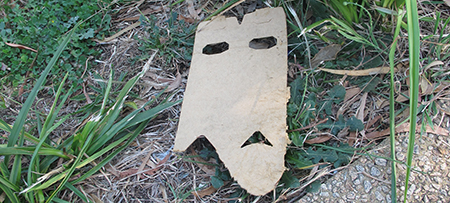
There are a number of important issues in Australia that affect the way our society operates, around asylum seeking, criminality and terrorism. The two main federal political parties appear to be acting on the notion that they will remain, or be, electable if they show that Australia is tough on both issues. They each support the ‘get tough’ attitude of the other, whichever of them is in power and they have been doing this for decades. They do this based on the notation that we need to be kept safe from “illegal immigrants” and terrorists – and sometimes conflate the two groups. They promulgate the fear and then play to it. (more…)
March 17, 2016
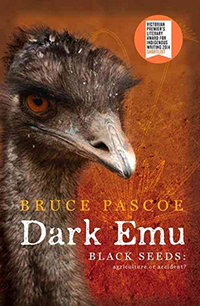 Dark Emu – Black Seeds: agriculture or accident
Bruce Pascoe
ISBN: 9781922142436
$35
175 pp, including index and extensive bibliography
Magabala Books 2014
Shortlisted: 2014 Victorian Premier’s Award for Indigenous Writing
Bruce Pascoe is an extraordinary writer and he has crafted an extraordinary book. In Dark Emu he examines the history of Aboriginal relationships with the land as that history has been concocted over more than two centuries by European ‘invaders’. (more…)
March 7, 2016
We are living fearful lives. Our politicians are keeping us that way and the media are assisting them eagerly. Although we live in the ‘information age’, we are not given ready access to the information we need to make informed choices or to intelligently debate the issues that affect our lives. (more…)