March 5, 2016
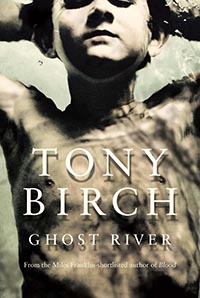 Ghost River
Tony Birch
University of Queensland Press 2015
ISBN: 9780702253775
$29.95
294 pp
This wonderful novel by Tony Birch is like the river itself. It often flows gently, within defined banks, and occasionally overflows in violent flood, destructive and uncaring. In this, the river could be considered as the main character, around which the other characters ebb and flow.
The (other) main characters, viewed from the human perspective, are Ren and Sonny, two twelve-year-old boys living next door to each other in the Richmond area of Melbourne, near the Yarra River around the 1960s to ’70s. Sony is a bit like the uprooted trees that occasionally career down the river, a potential hazard. Ren becomes his best friend and tries to buffer Sonny’s behaviour. (more…)
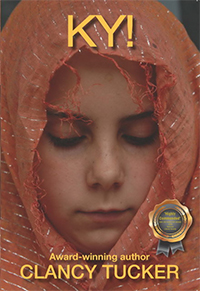 Ky!
Ky!
Clancy Tucker
ISBN: 9780646932262
$15
95 pp
Clancy Tucker Publishing 2015
Clancy Tucker has written a delightful story of a teenage girl overcoming adversity. Rida is an immigrant, a Muslim, and is bullied at school because of the way she looks and because she is regarded as a nerd. She doesn’t fit in because she stands out. In the process of trying to avoid her tormentors, she meets people who assist her in unexpected ways.
Rida also meets Ky, another girl who doesn’t fit in and who has a secret that eventually turns Rida’s life around completely. This is a narrative very much of our time, dealing with issues of xenophobia and prejudice and how various people deal with these. (more…)
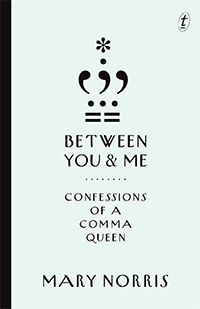 Between You and Me : confessions of a comma queen
Mary Norris
ISBN: 9781925240993
$22.99
203 pp plus index, notes and bibliography
Text Publishing 2015
Much as I love delving into language and grammar, I would not ordinarily pick up an autobiography of a copy editor; but the subtitle grabbed my attention and piqued my interest.
This is not so much an autobiography as a collection of anecdotes and accounts of those who work in this field, sprinkled with examples of good and bad use of language and its grammar with an ultimate shrug of the shoulders, as if to say: Who gives a flying duck? The ebb and flow of this entertaining work reminds me of the writings of Bill Bryson – musings more than exposition. (more…)
February 19, 2016
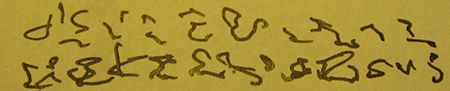
If printed books disappear, what will happen when the lights go out – when we can no longer run our computers? Will we have anything to read? Will there still be anyone who knows how to read and will anyone still be able to write? Will the profession of scribe be resurrected? (more…)
January 30, 2016

The first wave of foreign insurgents onto a large island continent lying between the Indian and Pacific Oceans in 1788 can be examined as a metaphor for the dire straits all life on earth finds itself in today.
The passengers and crew of those eleven ships came from a society that considered the ‘great unknown continent’ to be empty and ripe for exploitation. There was a disregard for the existing inhabitants and their culture, as well as for the land with which those inhabitants were intimately and inextricably bound. The foreigners manipulated the official record so that they could consider themselves as having come into a vast land with unlimited resources, in relation to which there were no competing interests. (more…)
January 17, 2016

“What’s in a name?” Call a rose a squirrel, it will smell the same. Or will it? Would my preconceived idea of what a squirrel smells like – I’ve never smelled one – change my experience of the flower’s scent? Was Shakespeare wrong? (more…)
January 7, 2016

Living in a democracy, we spend a lot of time considering the merits of the people who want us to vote them into positions of government. And then we spend a lot of time discussing and arguing about and contemplating whether we used our vote correctly, or voicing our disappointment at the shortcomings of the present incumbents. (more…)
December 18, 2015
Tags: dystopia, novels, quest, review, YA fiction
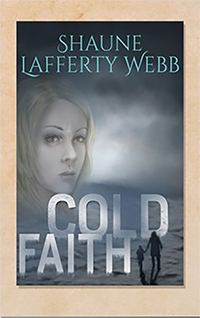 Cold Faith
Shaune Lafferty Webb
Hague Publishing 2015
ISBN: 9780992543723
$18.50
221 pp
It seems that a large selection of the books offered to YA readers continue to be post-apocalyptic. Why is this? Are authors trying to prepare young people for ‘real’ life or are there other, deeper meanings in all this?
Having young people be heroes has always been possible in a ‘normal’, though somewhat fanciful world: series such as The Secret Seven and Swallows and Amazons. In these, Enid Blyton still had functioning adults in the background, even if they did not form part of the adventures. The more modern offerings appear to paint worlds in which the adults have lost the plot and the young people have taken it upon themselves or are charged with the responsibility to find solutions. This is the case in The Hunger Games, the Divergent trilogy, the Matched trilogy and even in the Harry Potter series. At least Harry Potter and his friends receive training in survival skills from some of the adults around. (more…)
December 17, 2015

We are all different, unless you are the old bearded man in the crowd in Life of Brian who insisted he was the only one who was not an individual. None of us is identical to any other person – get used to it.
The problem we face is the result of chimeras: we are, it seems, wired to grouping people and then treating all members of a particular group as identical and to believing them to be fundamentally different from members of every other group, including our group. And then we start to fear the other and that fear leads to unhelpful, even destructive, behaviour. Next, we notice that some members of our group are not the same as us and they have to be re‑grouped. Take that to its logical conclusion and each of us will belong to a group of one. Funny that! (more…)
December 1, 2015

They come onto the train and look around. She leads the way to a group of empty seats and sits down. He sits opposite her. They’re silent as the train takes off. Both have their legs leaning to the left so that their knees don’t touch. She is holding her bag on her lap with both arms. He is clutching a book.
She looks through the windows at the back fences streaming past, the colourful graffito tags indecipherable. He starts reading his book: Life of Pi.
They both wear school uniforms, from different schools. He looks to be three years older than she. She turns to him. “That was a cool film.” “Yeah, but the book’s better.”
I wonder about their relationship. Casual? Romantic? Just met? (more…)